
HIGHLIGHT IN VIENTIANE CAPITAL CITY-VANGVIENG-PAKSE-4000ISLANDS
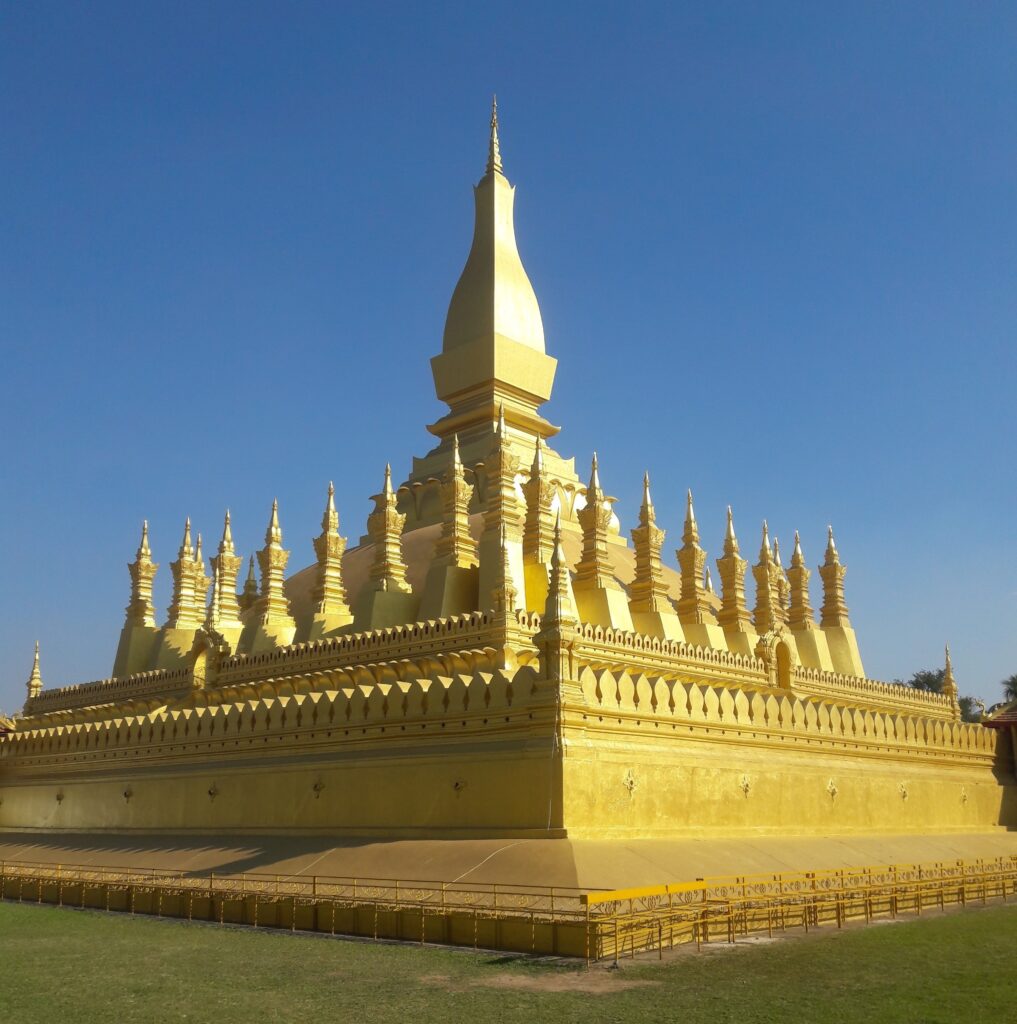
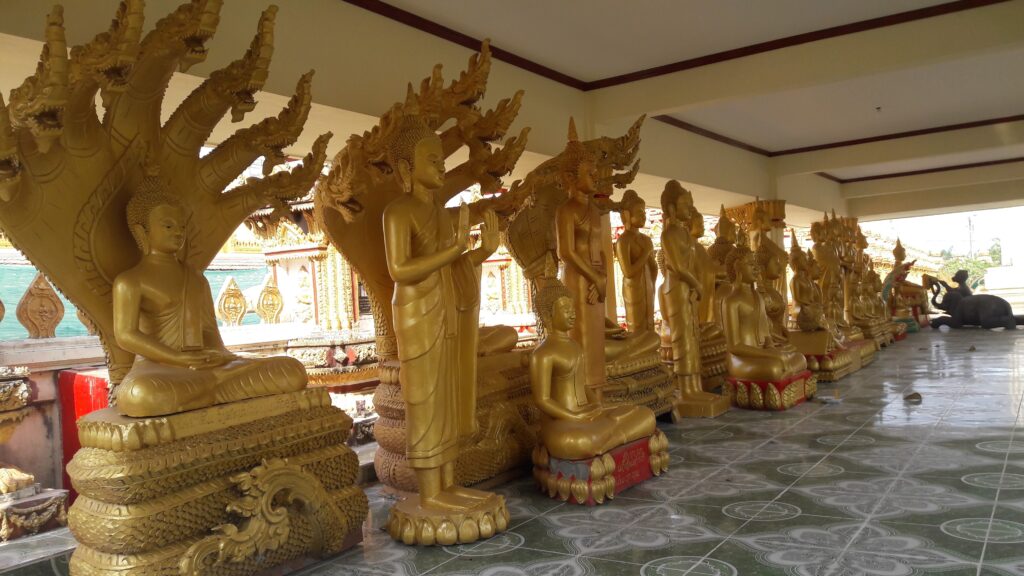
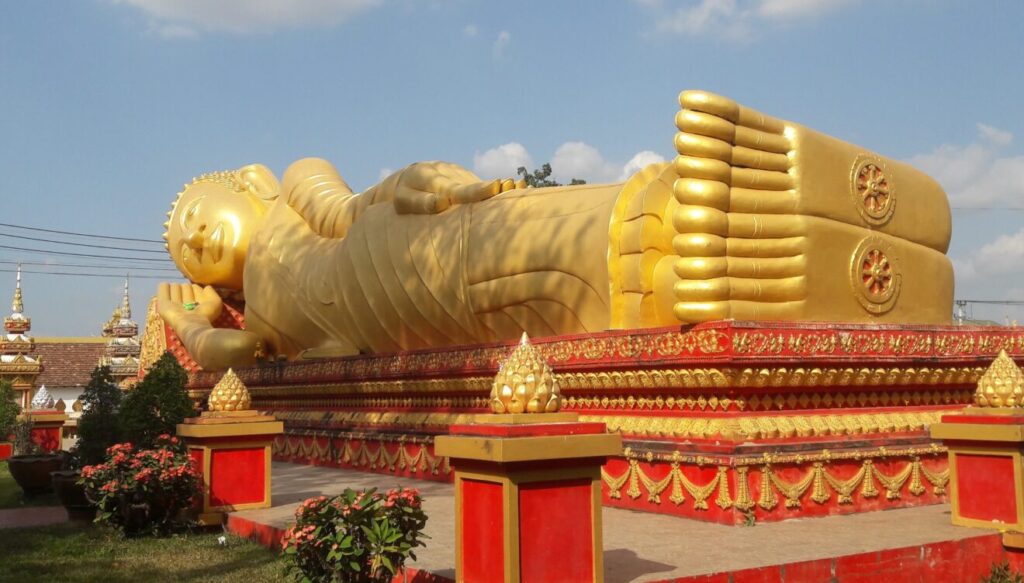
Phra That Luang Stupa, it is well know by the name “Great sacred Stupa” it is an other famous landmark in Vientiane Capital City of Laos. It is the most important religious monument in Laos and a power is symbol of lao national identity. The mainly image of golden stupa represents of Lao Buddhism and always appears on national emblem, currency, official documents. The great sacred stupa is believed that originally has been built by Paya Chantabury Pasithisak and five Arahanta monks who brought the relics of lord Buddha from Si Lan Ka and enshrined the relics into sacred stupa in the 3rd century BC, Until in the 16th century, King Setthathirath who has moved former capital city from Luangprabang to Vientiane capital city of Lane Xang Kingdom(Land Of One Million Elephant Kingdom). He as designed and constructed the great sacred stupa in former currently form of Hindu Khmer temple in 1566 and during succeeding year four temples has built around one on each side of great sacred stupa. At the present time it has survived from the war only two temples that we called North and South Temples.
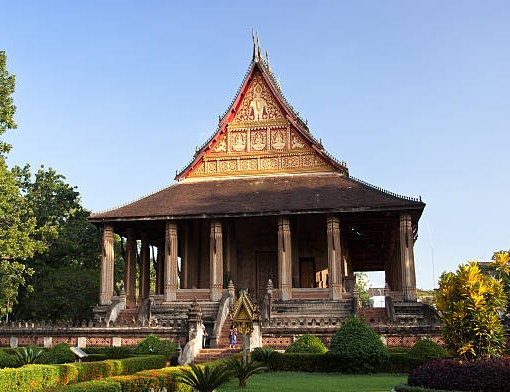
Hor Pha Keo, the main structure was housed for the famous Emerald Buddha and now resides in Bangkok. It was originally built by the King Setthathirath in 1565 who was the King of Lane Xang Kingdom(Land Of One Million Elephant Kingdom) who was the great warrior king which he has brought Emerald Buddha from Chiangmai (Northern Of Thailand) to Luangprabang until he’s moved former capital city from Luangprabang to Vientiane Capital City. The architecture of temple was traditional Buddhist style, in Laos after revolution in 1975 it’s transformed into museum after that it has displayed many of collection of bronze buddha, statues, stone carving, ancient manuscripts, ceremony objects and religious artifacts.
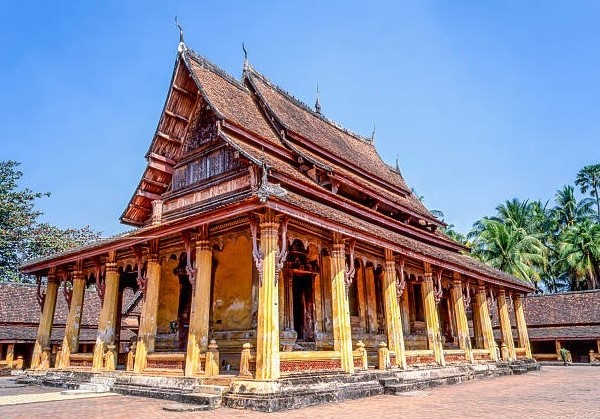
Wat Sisaket, the oldest temple in Vientiane Capital City Of Laos. It was originally built by the King Anouvong in 1818 who was the last monarchy of Lane Xang Kingdom (Land Of One Million Elephant Kingdom). This temple was contemporary style of Buddhist architecture and the main temple is surrounding terrace and an ornate five-tiered of roofs with features remarkable frescoes and over 6,000 Buddha images. Interior of the main temple decorated of mural painting pictures that depicted Buddhist and Hindu religions.
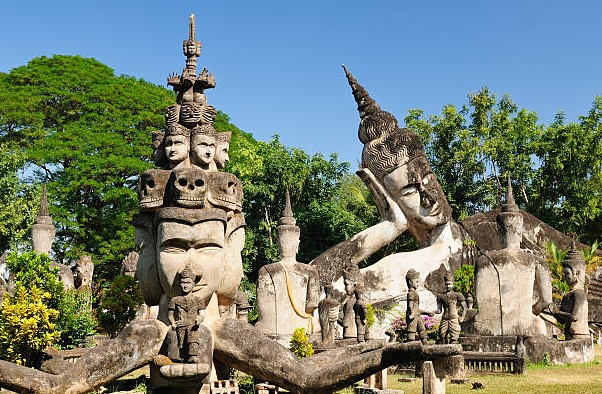
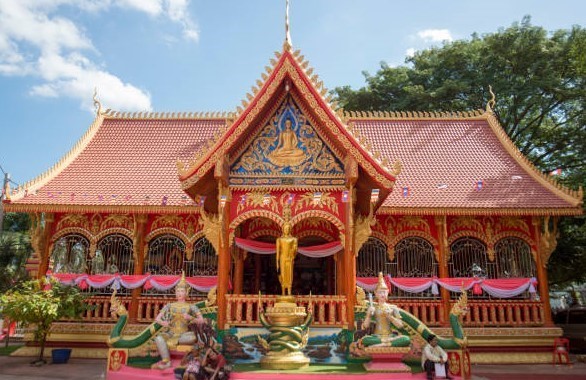
Wat Xieng Khuan, it is well know local people called Buddha Park and It is located outskirt of Vientiane 25 kilometers that journey will be approximately 40 minutes by driving, and it originally was built by senior monk Luang Phou Boun Leua in 1958 on the Mekong river bank and it is the site of a large collection of many kinds of Buddhist and Hindu Sculptures of Buddha statues, Hindu god, goddess, monsters and demons. The most interesting at the Wat Xiengkhuan that it has beautiful Pumpkin monument there is three tiered structures hell, earth and heaven.
Wat Si Muang, the site of the lak meuang (city pillar), which is considered the home of the guardian spirit of Vientiane. The large sim ordination hall was built during the reign of King Seththathirath in 1565 and it’s destroyed in 1828 until in 1915 it was reconstructed around the lak meuang, and consists of two halls. It is holy temple where Buddhist people like to come to pray for monk blessing which it is customary ritual to receive personal blessing by the monk chanting and sprinkle holy water on over your head with typing a white cotton thread(saisin) around the wrist for bring the good luck, good health, good business, prosperity and longevity.
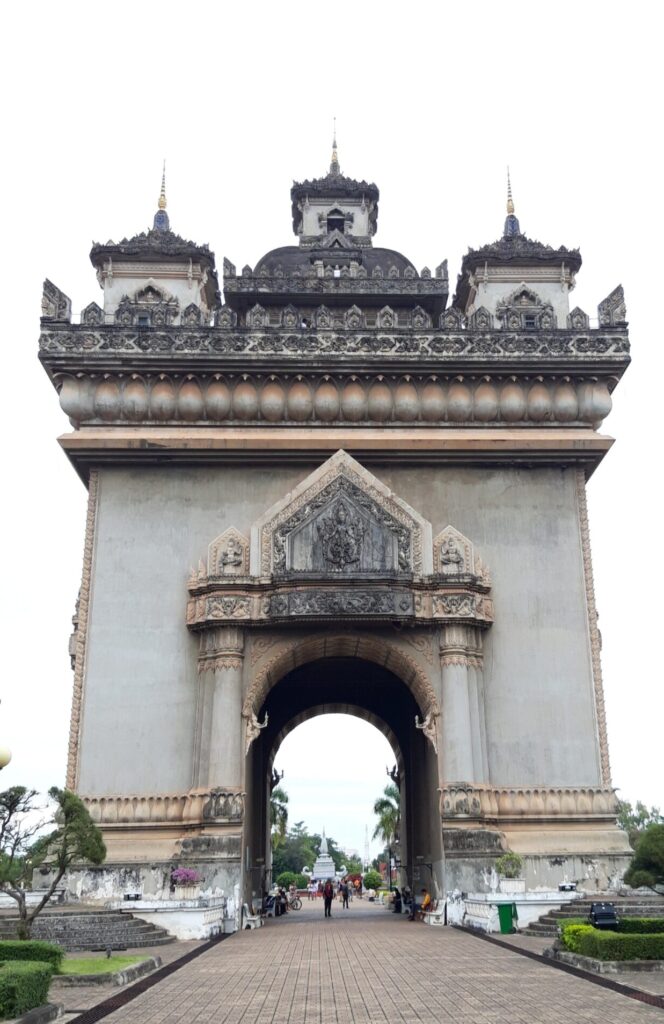
Pa Tou Xai, It’s also well known as the victory gate or Anousavari. It was originally constructed in 1968 and it’s designed to honored Laotian who died in World War II. Especially, the its architecture is inspired by the Arc of Triumph in Paris, Patouxai is worthy to climb up the stair about 170 steps to the top of monument to seek for the stunning view around Vientiane Capital City.
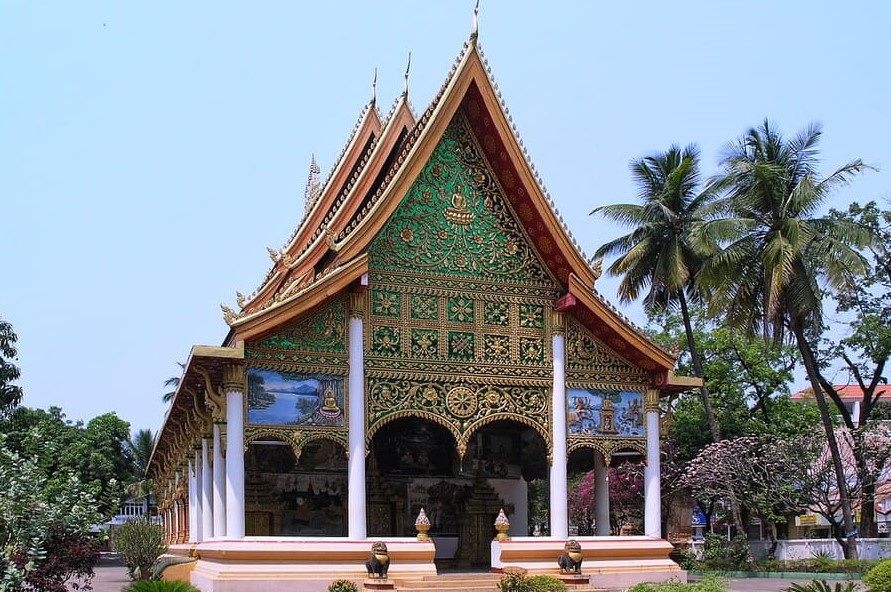
Wat Inpeng, the oldest temple in Vientiane Capital City Of Laos. It was originally built by the King Seththathirath in 1500 who was the monarchy of Lane Xang Kingdom (Land Of One Million Elephant Kingdom). This temple was contemporary style of Buddhist architecture, and the main temple it has been destroyed by Siamese invaders in 1827. It has reconstructed and decorated with beautiful of mural painting pictures that depicted Buddhist and Hindu religions.
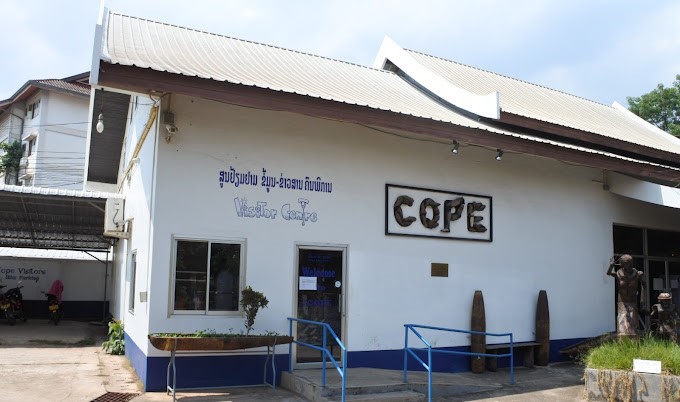
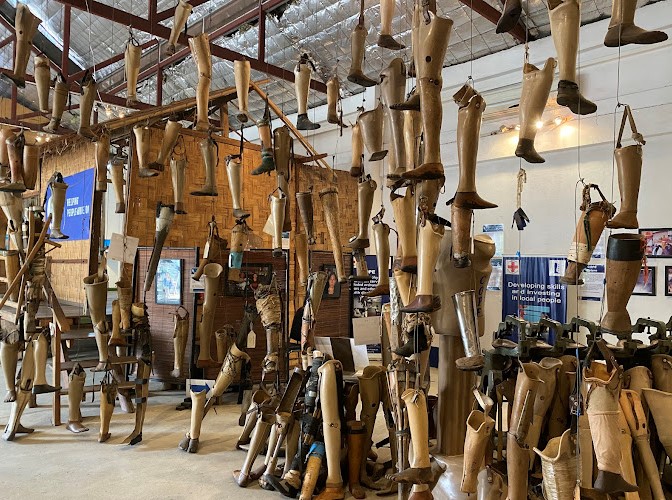
COPE(Cooperative Orthotic Prosthetic Enterprise), it is local non-profits established in 1996 in Vientiane Capital City to provide comprehensive physical rehabilitation services and we are partnering with Ministry of health. Organization highlighting the Lao people’s continued day to day struggle with the unexploded ordnance as a result of heavy bombing campaigns during the Vietnam War era.
HIGHLIGHT IN VANGVIENG TOWN
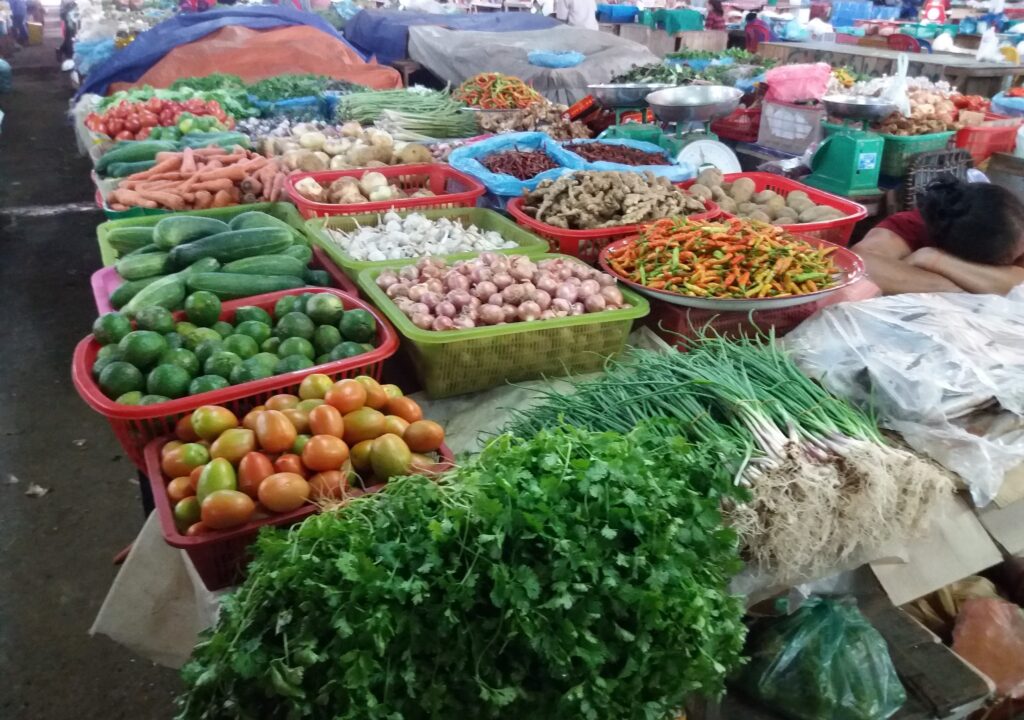
The Local Morning Market is fabulous place to explore and it’s defined by its vibrant mix of culture, history and modern expansion where you will seek for the local people’s daily life to sell their local products with variety of fresh vegetables, fruits, herbs, spices, meats & fishes for their ingredients of authentic lao foods.
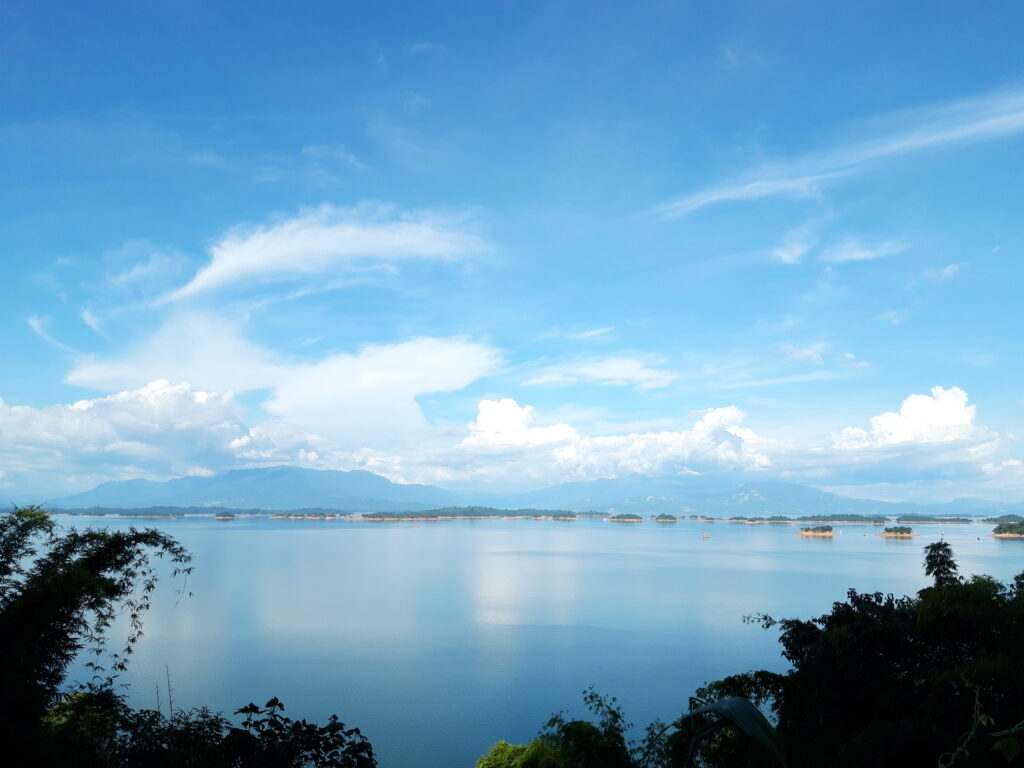
Nam Ngum Reservoir(Num Ngum Lake ), it was originally build by human labor in 1968-1971 for the Hydroelectric Power Dam which contributed electric power for Laotian people and besides that is part of majority income for Laos where we export electric power to Thailand, China & Vietnam. The lake is massive of fishing area of fishermen to make a life living and this is very impressive place where you will enjoy your boat cruise and seek for stunning scenery a thousand of islands and visit one of small island where you will see local handicrafts that they weave bamboo baskets, bamboo trays, sticky rice boxes, bamboo cages and fishing traps, enjoy your lunch on boat cruise.
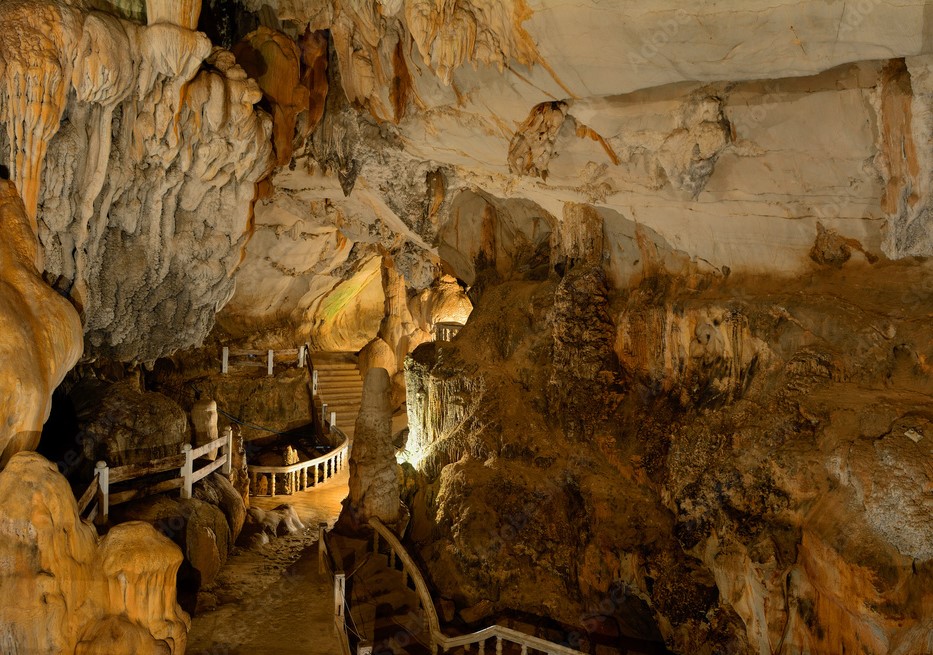
THAM JANG CAVE, it also called Steadfast Cave and the most famous of the cave which it was the large carven was used as a former Bunker in defense against marauding ( Yunannese or Chinese black flag armies) in early 19 century. It contains stunning from spark of limestone where possible to climb up the stairs 147 step to see panorama view, amazing of stalagmites and stalactites.
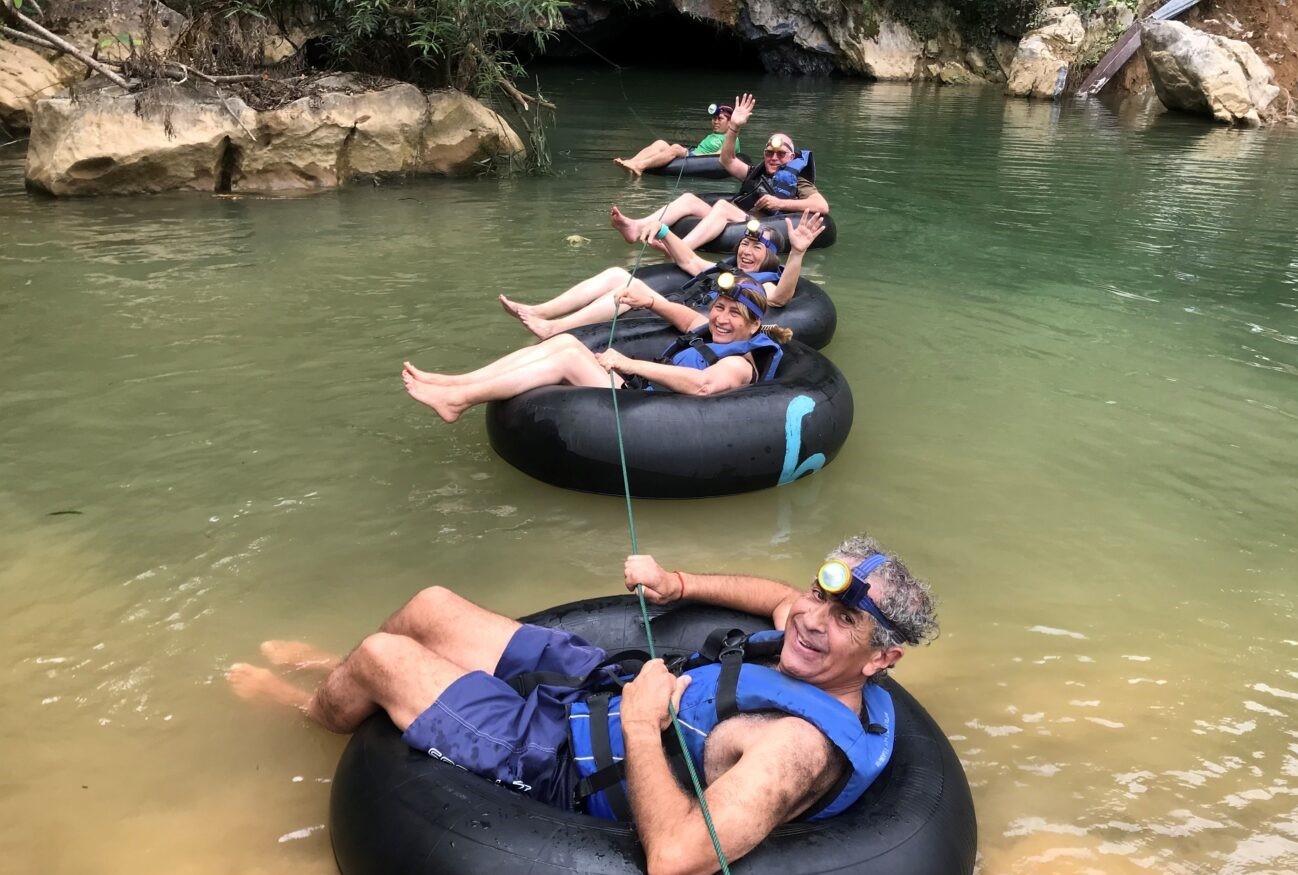
Tham Nam, it is well know as Water Cave and it is about 500 meters long and Water Cave filled by limestone carven located in karst landscapes of Vangvieng and Tham Nam Cave where is spring water occur the Nam Song river to feed the people in Vangvieng as well (Remarkable: It will be good a choice to bring spare cloths, water shoes and bathing suits to get wet that you will also enter to water cave by holding string and riding the tubing to access but after activity that you be able to get change).
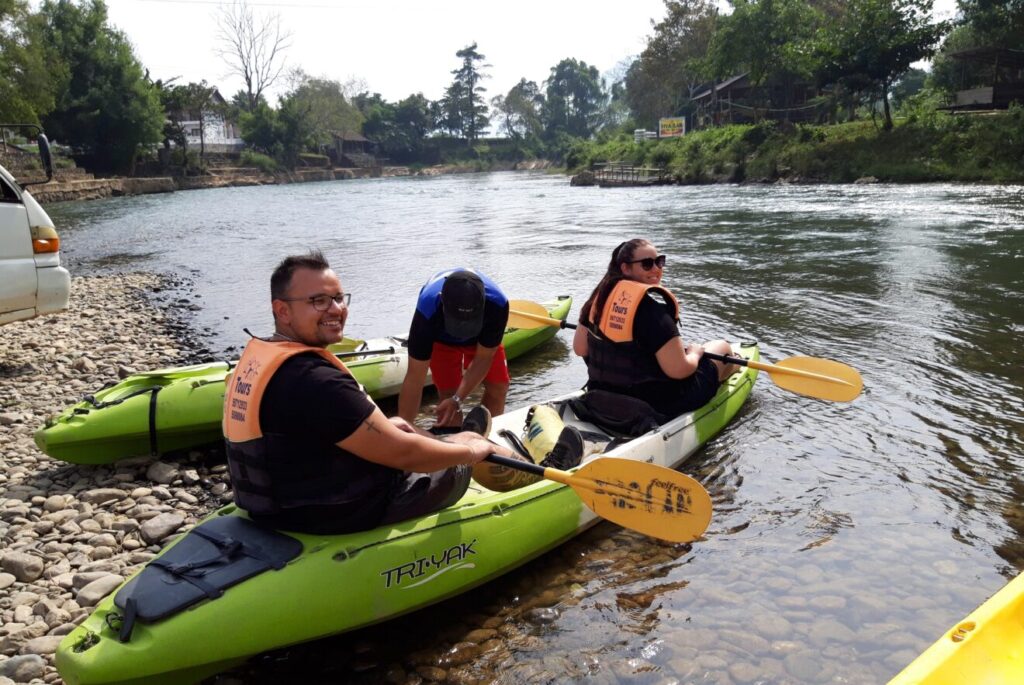
Kayaking, amusement with your Kayak along Nam Song river for one and half hour. You will meet your kayak local guide who will teach you instructions and some experience Nam Song river to you for understanding clearly. And then you will enjoy your Kayaking by paddling along Nam Song river to explore stunning scenery of mountain karts and seek for life living of local people where they live along the river banks.
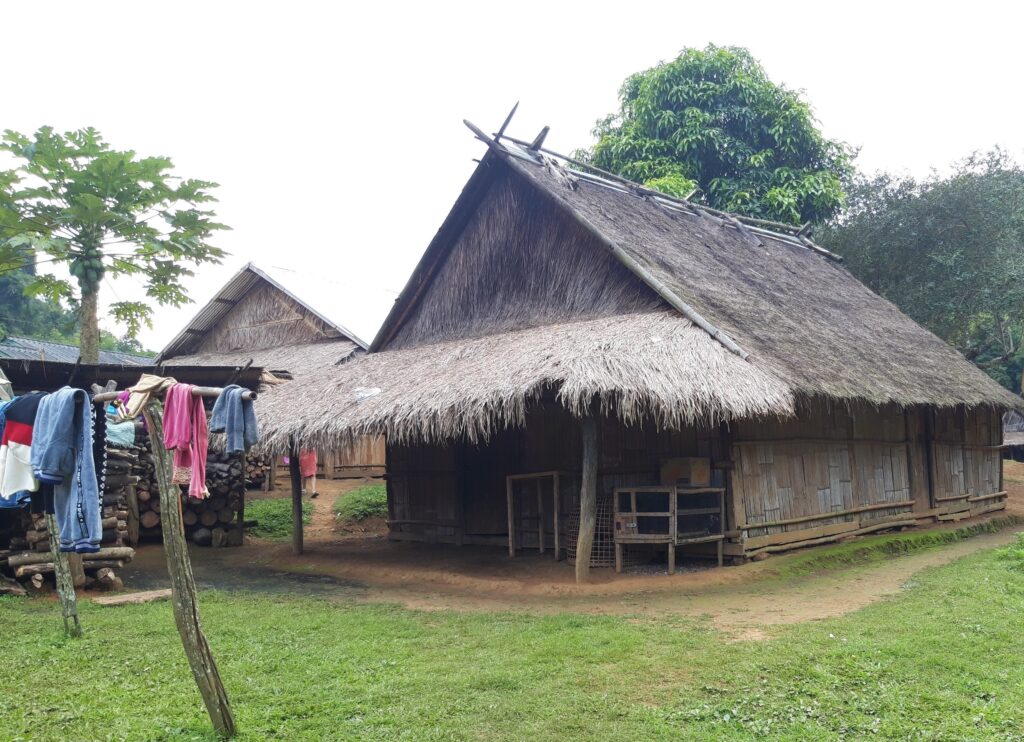
Hmong(Hill Tribe Minority), they’re originally migrated from Yunnan southern of china to Laos more than 200 years. They prefer to settled their residence on high lank mountains around northern of Laos and it is good experience to seek for the friendly local Hmong villagers where we will see their traditional ,culture and life living. And mainly occupations they work in agriculture as farmers, gardeners, blacksmith men and hunters.
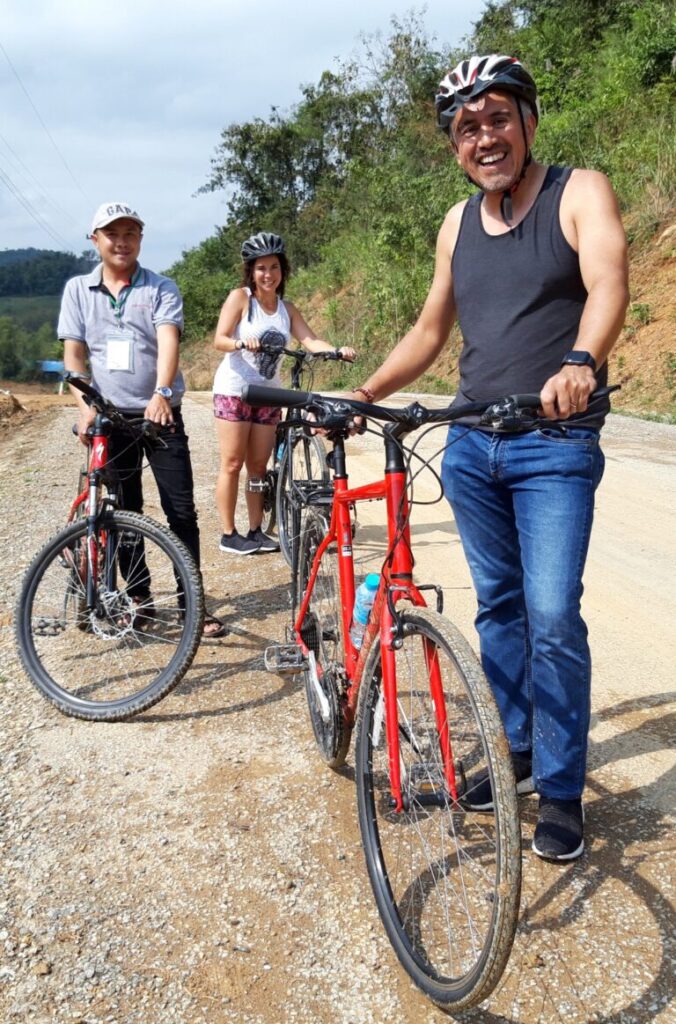
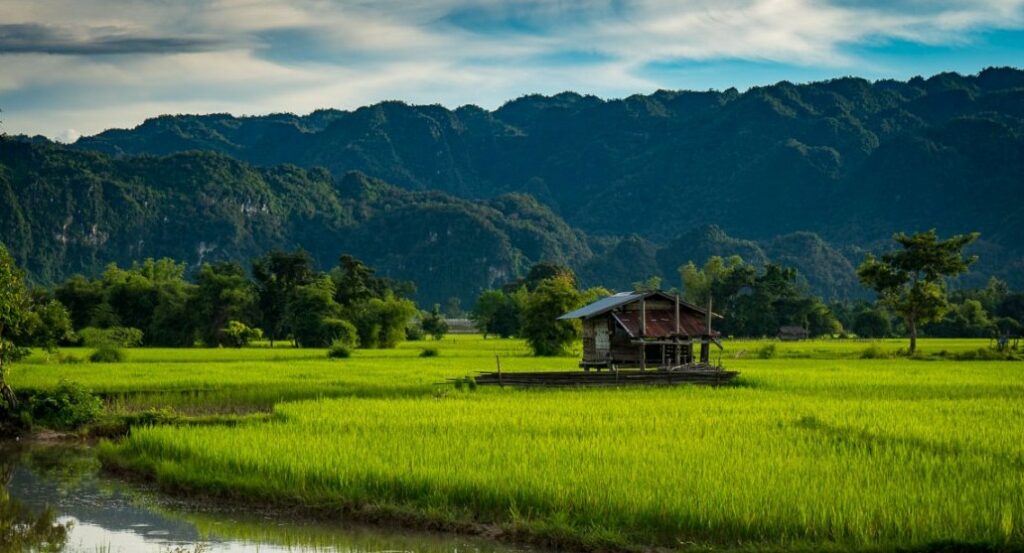
BIKE, blissful with your classic biking through the rice field surrounded by karst limestone formations to enjoy beautiful scenery of the Nam Song river through the valley outskirts of Vangvieng and explore the life living local people in countryside, seeking for mysterious of the caves with enjoy your swimming at Blue Lagoon natural pool which it has limestone mountains occurred spring water.
HIGHLIGHT IN PAKSE-4000 ISLANDS
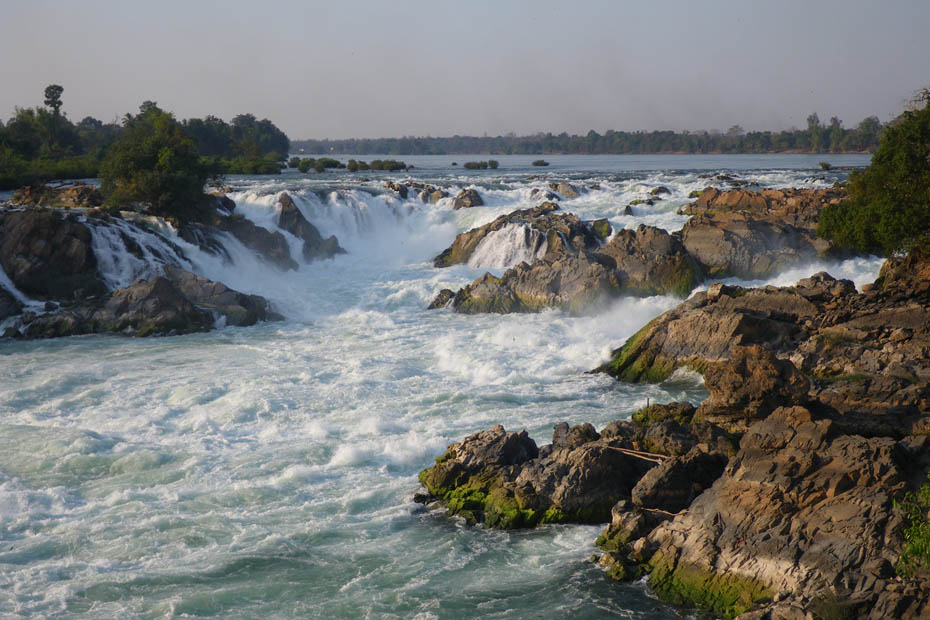
Khon Phapeng Waterfall, it’s well know by local people called Negara waterfall and it’s located in southern Laos(Si Phan Don-4000 Islands) region in South East Asia’s largest and the most of powerful waterfall. It’s spanning more over 10 kilometers, this natural wonder acts as a formidable barrier on the Mekong River which it is supporting incredibly biodiversity and shaping regional history. Many of local people are superstitious to worshiped of Khon Phapeng as water element spirit of Naga. This is the most spectacular and largest waterfall in Laos where many of visitors would like to seek for the mysterious about it.
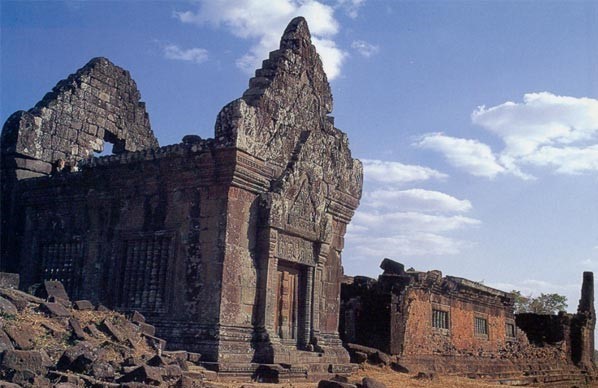
Wat Phou, it is the most oldest archaeological sites in Laos. One of sacred of Hindu Khmer temple in the site was constructed around the 5th century but most buildings found in the complex are from the 11th to 13th centuries. Like other notable Khmer architecture in Southeast Asia, it was constructed using sandstone, late rite and bricks that date back to Iron age. Among many of the outstanding carved there are the Indra, the Hindu god of war, storms, and rainfall, riding a three-headed elephant, Shiva, Brahma, Vishnu riding on a Garuda, and eagle statues. Wat Phou has been an active temple for Buddhist religious practice for quite some time because Buddhism replaced Hinduism in Laos in the mid13th century.
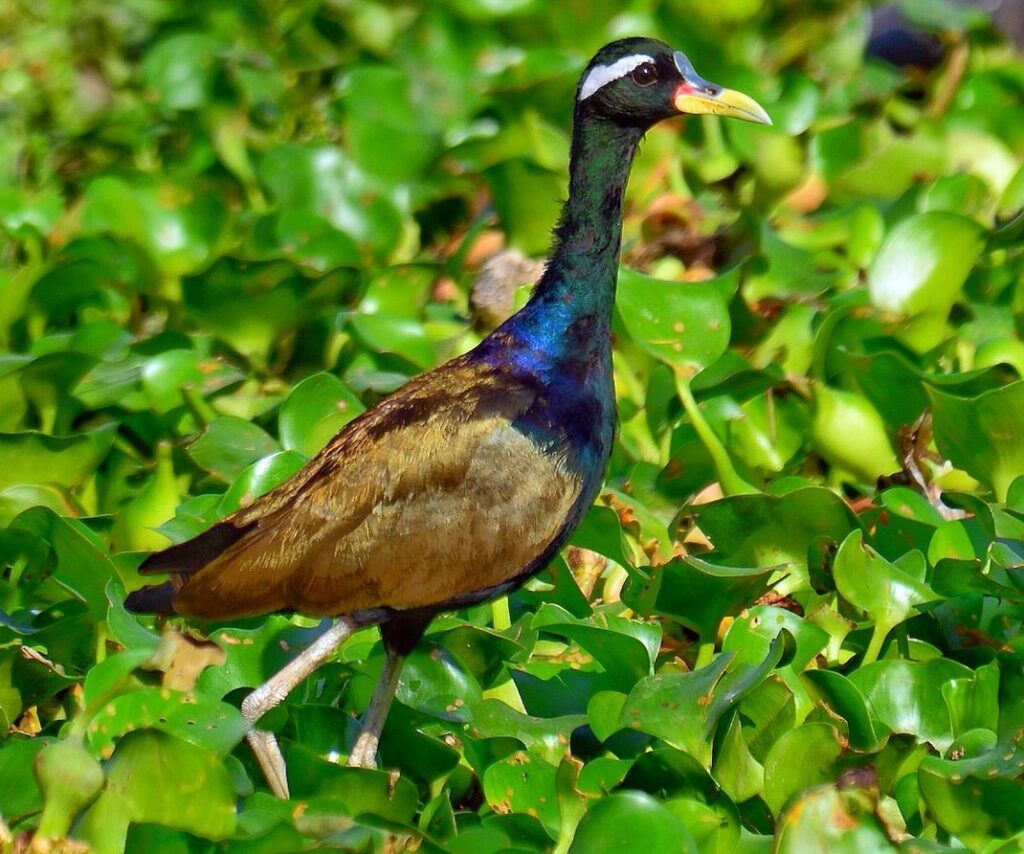
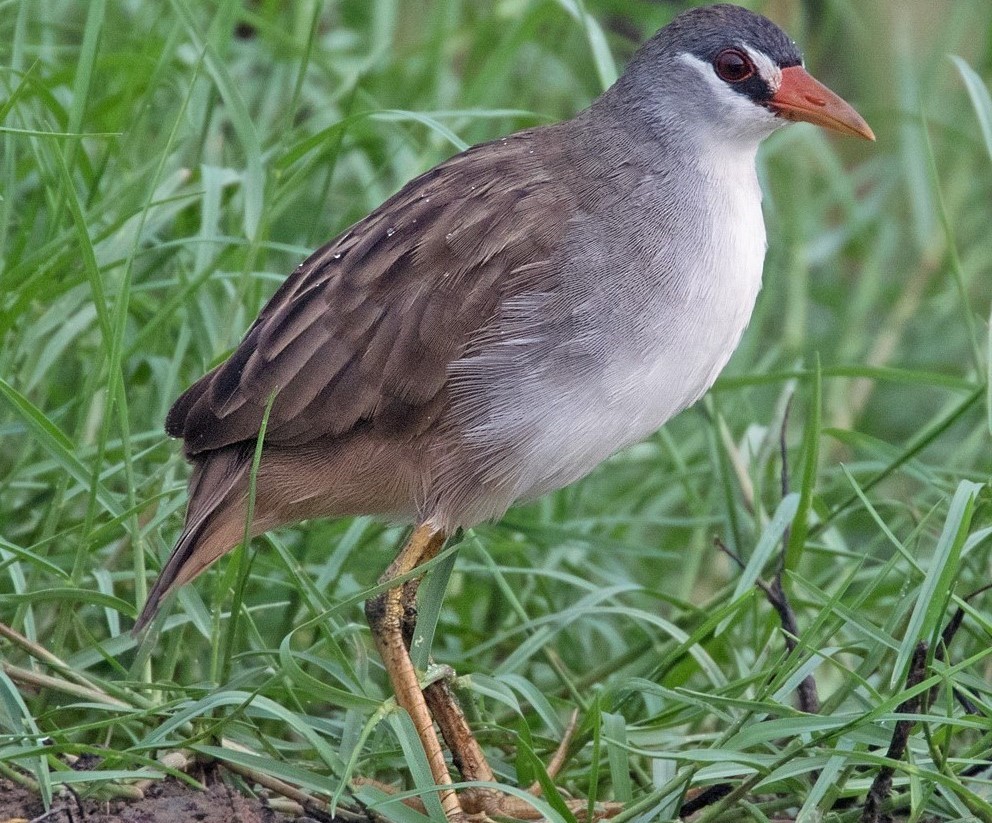
Ban KhietNgong, it is great place to explore around Xe Pian National Protected Area. It is massive wetland and tropical forest which It will be a great place to explore more than 320 recorded birds species, and it will offer you prime time for seeking beautiful of birds by taking a small Paddle Boat about 2 hours. Besides that you still be impressive a thousand of water buffaloes and cows cool up and sun bath their body on the buddy in the rice fields around the lake.
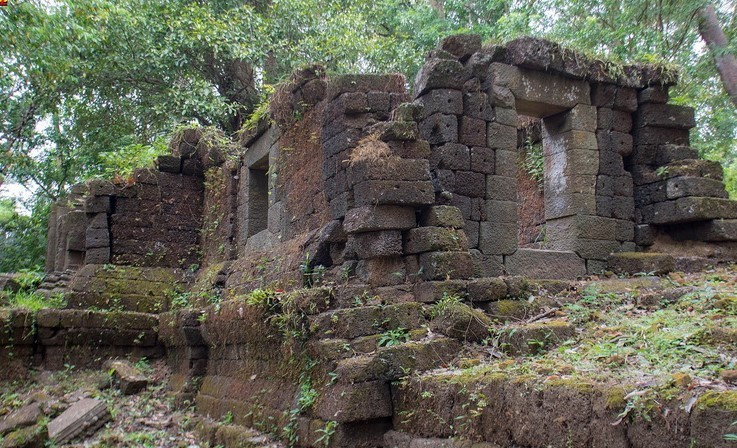
Wat ToMo(Wat OupMoung), it is part of complexes of Wat Phou temple in Champasak which it is a tale of a legend Mon Khmer sanctuary swallowed by Laotian jungle. It was located on the east side of the Mekong river bank and it originally was built by King Yasovarman I in the late 9th century to offer as an important religious outpost which connected to the border Wat Phou.
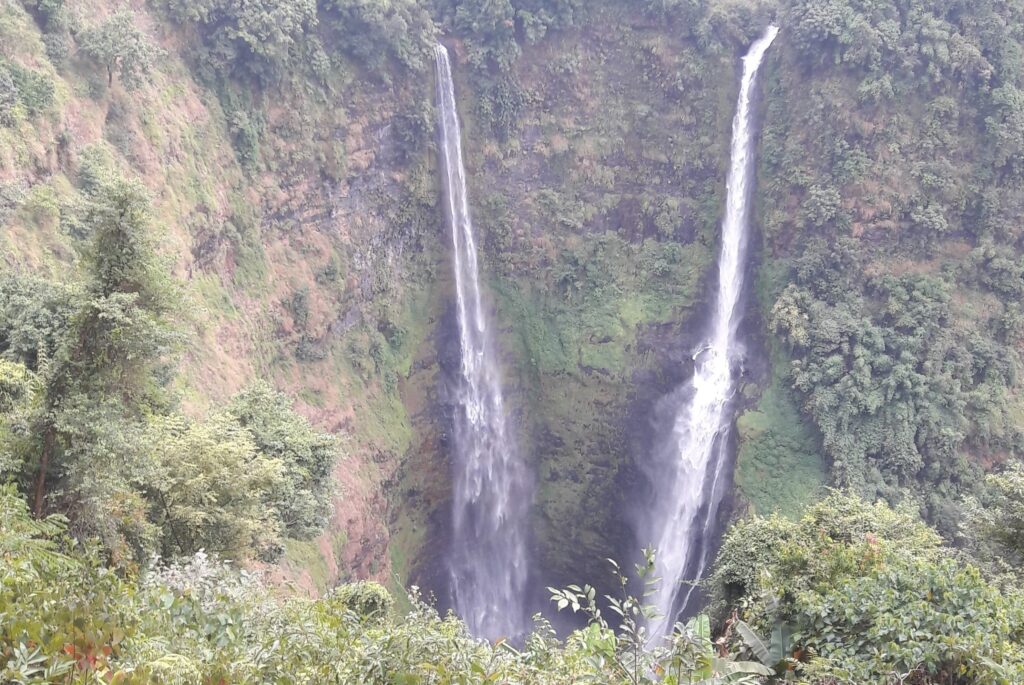
Tad Fane waterfall, thin ribbons of water plunging hundreds of feet into a ravine. Local hill people recount a story of local hunters ambushing a deer at the falls, thus giving its name (Tad = Waterfall, Fane = Deer).